






DTF vs. Screen Printing: Which Is Better for Custom Apparel in 2026?

For decades, screen printing has been one of the most important production methods in custom apparel.
It still is.
But the way apparel shops receive orders has changed.
Customers increasingly expect:
That is where DTF transfers have become especially useful.
At Sam’s DTF Transfers in Richardson, Texas, we work with print shops, apparel businesses, schools, brands, and screen printers that use DTF alongside their existing production methods.
The important question is not:
“Is DTF better than screen printing?”
The better question is:
“Which method makes more sense for this particular job?”
| Feature | Screen Printing | DTF Transfers |
| Setup | Screens and registration required | No screen setup |
| Small Orders | Can be less efficient | Very flexible |
| Many Colors | More production complexity | Full-color artwork in one transfer |
| Detailed Artwork | Depends on separations and setup | Well suited to fine detail and gradients |
| Personalization | More difficult | Easier to manage |
| Repeat Large Runs | Very efficient | Also scalable, depending on workflow |
| Equipment | Screen-printing production setup | Heat press when using ready-to-press transfers |
| Inventory | Often printed in production batches | Transfers and blank garments can be stocked separately |
Neither method wins every category.
The best choice depends on quantity, artwork, garment type, deadline, and the equipment already available in your shop.
The biggest difference between screen printing and DTF is the setup process.
With screen printing, each color generally requires its own screen.
That can involve:
For a large repeat order, that setup can make perfect sense.
For a small order with several colors, however, the setup can become a significant portion of the production time.
DTF works differently.
The artwork is digitally printed onto transfer film, so there is no need to create a separate screen for each color.
For shops using ready-to-press DTF transfers, production can be simplified to:
order transfers → receive transfers → press garments
This is one reason DTF is attractive for short runs and complex artwork.
Imagine a customer needs:
12 shirts with a five-color logo.
A screen printer can absolutely produce that order.
But the question is whether the screen setup is worthwhile for only 12 garments.
With DTF, the same artwork can be printed as ready-to-press transfers without creating five individual screens.
That can make DTF particularly useful for:
There is also no minimum order requirement when ordering custom DTF transfers from Sam’s DTF Transfers.
That gives print shops more flexibility when customers need only a few pieces.
DTF does not eliminate the advantages of screen printing.
If you are printing hundreds or thousands of garments with the same simple artwork, screen printing can be very efficient once the job is set up.
For example:
1,000 shirts with a one-color logo
may be a very good screen-printing job.
Once the screen is ready and the press is running, the shop can move through garments quickly.
This is why many successful screen printers do not replace screen printing with DTF.
They use both.
The goal is to send each order through the production method that makes the most sense.
Screen printing becomes more complex as the artwork becomes more complex.
Designs with:
may require additional separations and production planning.
DTF is digitally printed, so full-color artwork does not require a separate screen for every color.
That makes DTF especially useful for designs that would otherwise require a complicated screen setup.
This is one of the strongest reasons apparel shops use DTF for certain customer orders even when they already have screen-printing equipment.
Another challenge for screen printing is variation.
A customer may need:
Every variation can complicate a traditional production workflow.
With DTF, different designs can be printed on the same gang sheet.
For example, one gang sheet could contain:
This can make mixed-order production much easier.
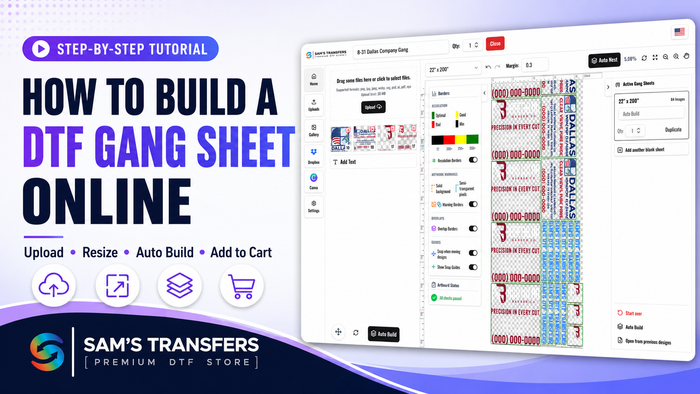
A DTF gang sheet allows multiple designs to share a larger printed sheet.
Instead of ordering one sheet for every design, shops can combine:
on one sheet.
This allows businesses to make better use of available print space.
Shops can either:
For print shops managing many small orders, gang sheets can become an important part of the workflow.
A shop does not need to own a DTF printer to sell DTF-printed apparel.
When transfers are outsourced, the shop primarily needs:
The DTF supplier handles:
This allows a screen printer, embroidery shop, or apparel business to add full-color DTF production without immediately adding another complete printing system.
For some shops, buying DTF equipment eventually makes sense.
For others, outsourcing remains simpler.
One of the most useful ways to think about DTF is not as a replacement for screen printing but as a second production option.
A screen-printing shop may receive jobs that are:
Instead of turning those jobs away, the shop can produce them with DTF.
That can expand the range of orders the business is able to accept.
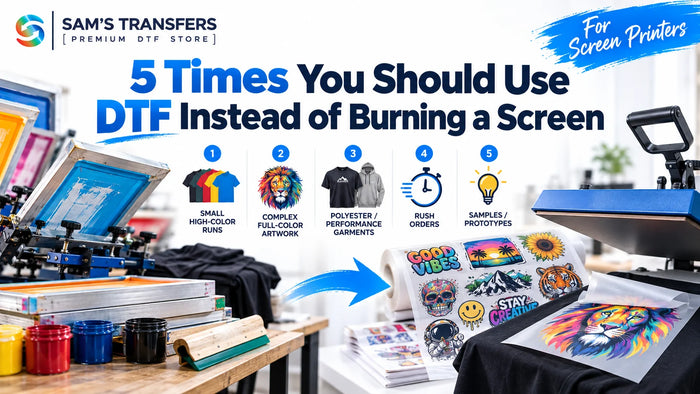
For practical examples, see our guide:
5 Times You Should Use DTF Instead of Burning a Screen
DTF transfers can also simplify inventory planning.
Instead of printing all finished garments in advance, a business can keep:
blank garments + ready-to-press transfers
separately.
When an order arrives, the correct garment can be pulled from inventory and pressed.
This can be useful for:
It can also reduce the risk of pre-printing the wrong garment sizes before demand is known.
Both screen printing and DTF can produce durable apparel when they are produced and applied correctly.
Screen-printing durability depends on proper ink curing.
DTF durability depends on transfer quality, correct heat-press application, and garment care.
A properly produced and applied DTF transfer can remain in good condition through many wash cycles.
However, durability should not be reduced to a universal guaranteed wash count because results depend on:
For detailed care guidance, see our DTF Transfer Durability and Washing Guide.
Print feel depends on several variables for both methods.
With screen printing, the result can vary based on:
With DTF, feel can vary based on:
A very large solid DTF graphic can feel different from a small chest logo.
Likewise, a heavy screen-print deposit can feel different from a lightweight water-based print.
The best method depends on the desired finished product.
For small quantities, DTF often has a major workflow advantage because there is no screen setup.
Examples include:
These jobs can often be handled efficiently using ready-to-press transfers.
For screen printers, this means DTF can fill the gap between one-off custom work and larger screen-print runs.
Large runs require a different calculation.
Screen printing can become extremely efficient when:
DTF can still be useful for large quantities, especially when artwork is complex or several designs must be combined.
But the decision should be based on the actual job rather than assuming one method always costs less.
Consider these factors:
You want maximum flexibility.
For many print shops, this is the best answer.
Screen printing handles the jobs it does best.
DTF handles the jobs that would otherwise be inefficient to put on press.
Sam’s DTF Transfers works with screen printers that want to outsource DTF production while keeping garment pressing and customer fulfillment in-house.
This can be useful if you want to:
Visit our DTF Transfers for Screen Printers page to learn more about the workflow.
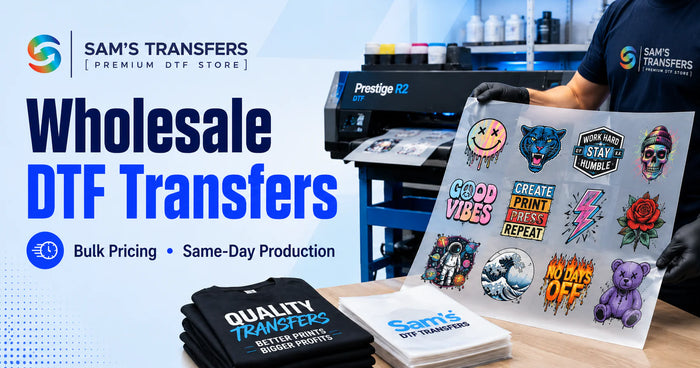
For larger-volume transfer orders, our Wholesale DTF Transfers page explains available bulk ordering options.
A large part of DTF profitability comes from reducing unnecessary production steps.
Sam’s DTF Transfers produces print-ready orders from our Richardson, Texas facility.
Print-ready weekday orders placed before the current same-day production cutoff can ship the same business day.
That can help print shops avoid waiting through a long external production queue before they can begin pressing apparel.
Fast transfer production is especially useful for:
The future of custom apparel is not:
DTF versus screen printing.
It is:
using the right production method for the right job.
Screen printing remains extremely effective for many high-volume repeat orders.
DTF offers flexibility for:
For screen printers, adding DTF transfers can make it easier to accept jobs that would otherwise be inefficient to put on press.
Instead of replacing your existing production system, DTF can become another tool your shop uses to improve flexibility and serve more customers.
If you are evaluating DTF for your print shop, explore our DTF Transfers for Screen Printers and Wholesale DTF Transfers pages to compare ordering options and production workflows.
Join our newsletter for guides, new designs and shop-growth ideas — a few great reads each month.


Comments (0)
Be the first to leave a comment.
Leave a Comment